हमारा ग्रुप (नुमोस् / NUMOS - Numerical Observatory for Space) अंतरिक्ष विज्ञान के विभिन्न विषयों पर काम करता है, और इसका मुख्य उद्देश्य अंतरिक्ष-आधारित अनुप्रयोगों पर ध्यान केंद्रित करना है। हम सौर भौतिकी की कई मूलभूत समस्याओं का अध्ययन करते हैं, जैसे सौर ज्वालाओं के दौरान कण त्वरण की उत्पत्ति, चुंबकीय पुनर्संयोजन और कणों का संचरण आदि। इन समस्याओं को समझने के लिए हम अवलोकन और सिमुलेशन उपकरणों का उपयोग करते हैं। अवलोकन के लिए, हम विद्युत चुम्बकीय स्पेक्ट्रम के विभिन्न भागों, जैसे एक्स-रे, रेडियो और पराबैंगनी (UV) विकिरण का उपयोग करते हैं। हम एक्स-रे, UV आदि तरंग बैंड के लिए उपग्रह-आधारित डेटा का उपयोग करते हैं। रेडियो अवलोकन के लिए, हम कई रेडियो स्पेक्ट्रोमीटर और इंटरफेरोमीटर का उपयोग करते हैं, जिनमें आगामी स्क्वायर किलोमीटर ऐरे (SKA) भी शामिल है। हमारा समूह मैग्नेटोहाइड्रोडायनामिक्स के माध्यम से प्लाज्मा प्रणालियों को समझने, पार्टिकल-इन-सेल सिमुलेशन, रे ट्रेसिंग एल्गोरिदम और हेलियोफिजिक्स में डेटा साइंस अनुप्रयोगों से संबंधित कई प्रकार के सिमुलेशन करता है।
शोध समूह के सदस्य
-

डॉ. रोहित शर्मा
सहेयक प्रोफेसर व प्रमुख
सौर एवं रेडियो भौतिकी • अंतरिक्ष प्लाज़्मा में विकिरण प्रक्रियाएं • हेलियोफिजिक्स सिमुलेशन
-
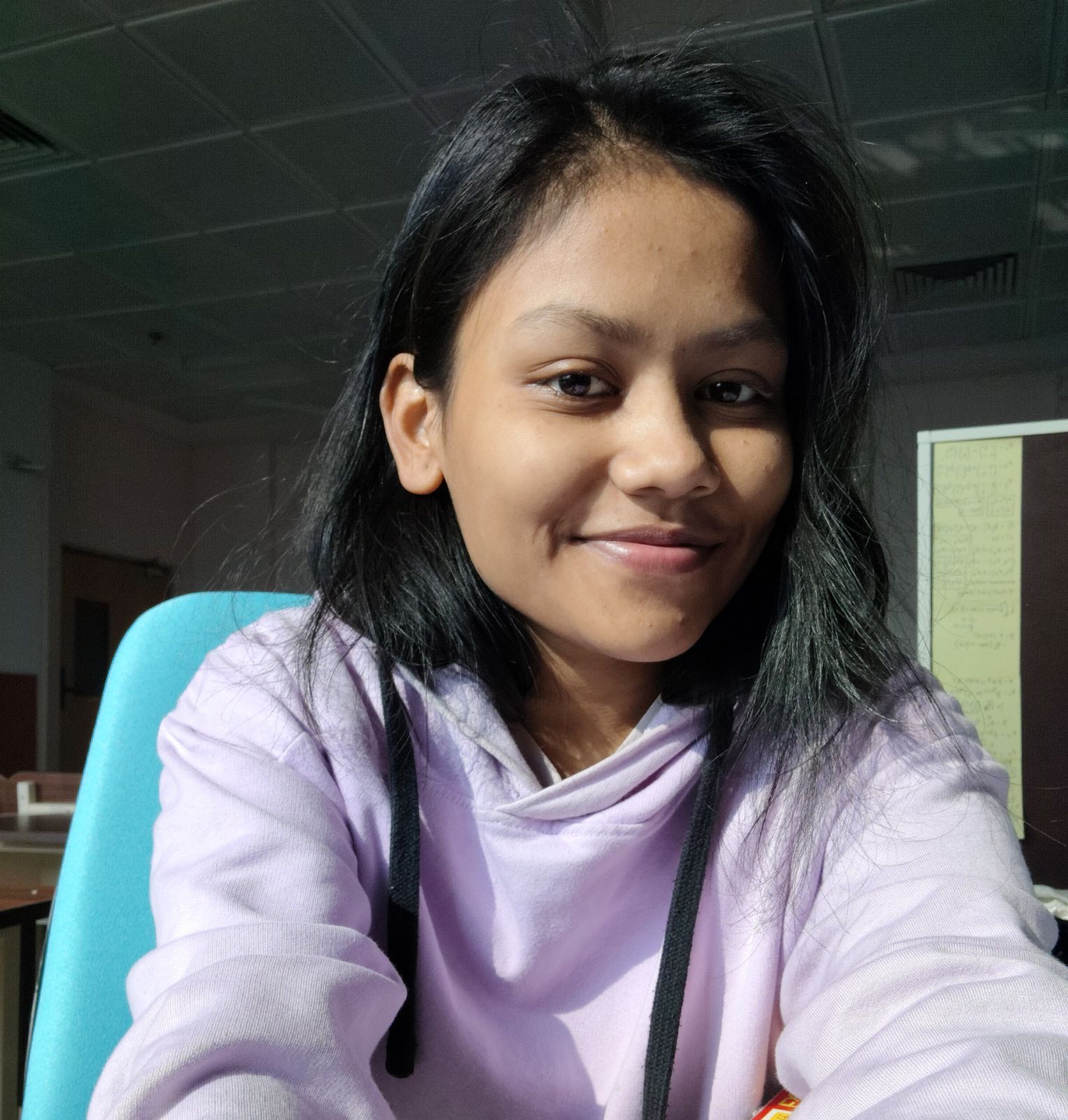
भास्का मोनी कलिता
पीएचडी छात्र
शोध विषय: रेडियो इंटरफेरोमेट्री का उपयोग करके सौर ज्वालाओं की स्पेक्ट्रोस्कोपिक इमेजिंग
2025–2029
-
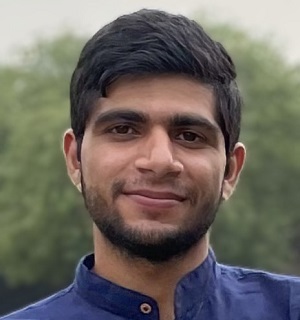
मितिन
पीएचडी छात्र
शोध विषय: सौर ज्वालाओं में पार्टिकल त्वरण की प्रक्रिया
2025–2029
-
श्रीजया मैती
एसटीसी अनुसंधान विश्लेषक
शोध विषय: अंतरिक्ष यान की चार्जिंग सिमुलेशन
2026–2028
-

शुभम खोसे
एम.टेक छात्र
शोध विषय: पार्टिकल-इन-सेल सिमुलेशन का उपयोग करके प्लाज्मा का अध्ययन
2024–2026
-

गणेश जयसवाल
एम.टेक छात्र
शोध विषय: रे ट्रेसिंग एल्गोरिदम का उपयोग करके विकिरण स्थानांतरण
2024–2026
-

एम जशवंत राव
पूर्व एमएससी (भौतिक विज्ञान) (2023–2025)
शोध विषय: सौर ज्वाला का एक्स-रे विश्लेषण
स्नातक वर्ष: 2025
शोध विषयों सूची
निम्नलिखित क्षेत्रों में पीएचडी, एम.टेक और छोटे प्रोजेक्ट उपलब्ध हैं।
ईमेल करें: rohitcbscient@gmail.com | rsharma@iitk.ac.in
Spacecraft Charging in Solar Wind
Spacecraft Charging is the electrical charge buildup on the spacecraft due to the interaction with the space plasma. The electrostatic charge can build up on the surface of the body, as well as inside the volume, known as surface charging and bulk charging effects. Varying plasma environments driven by solar activity lead to varying degrees of charging. This project aims to build simulation tools for surface and bulk currents.
Collaborators: Prof. Soumyabrata Chakrabarty, SPASE
Ray tracing in Solar Corona
Radio waves undergo scattering in the inhomogeneous solar corona. The radio waves propagation is altered from rectilinear path depending on the density gradients, refractive index variation. We study propagation of the individual ray packets in the presence of realtistic solar corona plasma configuration. We are using multiple codes to simulate the propagation. We modify pyC2ray, a python-based ray propagation simulator to include coronal scattering effects.
Collaborators: Michele Bianco (ETH Zurich)
Generative AI for Radiative Transfer
The problem of ray propagation in the solar corona is studied using learning models. The model will learn the propagation process. We use high-resolution solar radio maps and generative ML models to learn low-frequency radio wave propagation in the corona.
Collaborators: Brandon Panos (FHNW, Switzerland)
Electron Beam Propagation
Electron beams are proposed to be generated in the solar corona. When travelling in the corona, they loose their kinetic energy into the ambient plasma. Kinetic-scale PIC simulations of electron beam propagation and wave-particle interactions in the corona.
Collaborators: Bhoosan Paradkar (CEBS, Mumbai)
Making Solar Radio Instrument
We are building a versatile radio array to tackle multiple challenges in the field of sciences and enginering. In solar sciences,this instrumentation project will build solar monitoring stations (100 MHz – 10 GHz) with high time-frequency resolution, targeting solar spikes.
Collaborators: Mugundhan V., IIT Kanpur
STIX-MWA Solar Observations
Creating joint event lists from MWA and STIX for statistical studies of particle acceleration in solar flares.
Collaborators: Predrag, Andre Csillaghy (FHNW)
Theory of coronal turbulence and refraction
Developing theoretical framework to incorporate large-scale refraction into existing radio scattering codes.
Collaborators: Supratik, IIT Kanpur
MHD waves in Radio and EUV observations
Studying MHD wave signatures using high-resolution EUV and radio imaging spectroscopy during flares.
Collaborators: Abhishek Shrivastava, IIT BHU
Building Mock-data for Square Kilometer Array
End-to-end radio observation simulator (KARABO) for SKA science cases including solar flares, CMEs and quiet Sun.
Simulations of Solar Radio Observation
Forward modelling of solar radio maps (flares/CMEs/quiet Sun) using telescope models from various instruments.
3-D Stereoscopic Particle Acceleration in Solar Flares
Combining VLA, RHESSI, Parker Solar Probe, Solar Orbiter and STIX observations to constrain particle acceleration mechanisms.
Low Frequency MWA's Solar Physics Studies
Investigating coronal diagnostics and faint energetic events using Murchison Widefield Array data.
Simulation-based Project
Magnetic reconnection in turbulence & chromospheric evaporation simulations with forward modelling.